Music tempo has impact on our lives in many ways. According to Kate Hevner Mueller, famous American psychologist and educator, tempo influenced our emotions more than any other characteristics.
When we listen to music with a strong beat, our brain waves can be stimulated. Faster beats encourage more concentrated and alert thinking, while slower beats are associated with relaxed meditative states. Listening to music has a tendency to improve your state of mind. It can help keep anxiety and depression at bay.
Music can cause brainwaves across different areas to synchronize, especially when listening to preferred music or music that evokes strong emotions. This synchronization can foster feelings of connection.
In this article “The impact of music on the bioelectrical oscillations of the brain”, Domante explained the main scientific studies into the changes in the bioelectrical brainwave activity that occur while listening to music.
Starting from a healthy population, studies also seek to determine the effect of music in such conditions as disorders of consciousness, psychiatric diseases and chronic conditions, as well as to further explore the role of music for rehabilitation purposes. A brainwave spectral analysis is a powerful tool for these studies as it provides deep and objective insights into the effects of music on the brain. Further investigations in this field would not only deepen our knowledge of musical processing but would also open new perspectives for the use of music in clinical and therapeutic practices.
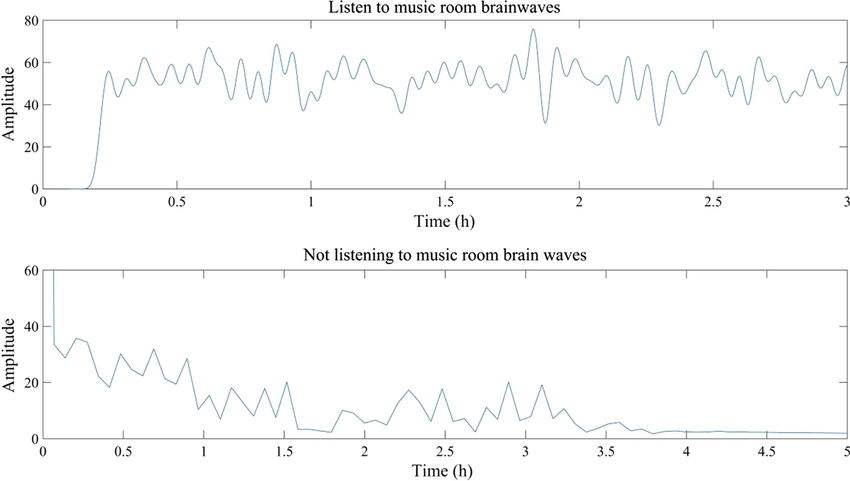
Source – available from: EURASIP Journal on Advances in Signal Processing.
In their article “Application of music in relief of driving fatigue based on EEG signals”, Wang and Zhendong conducted a study on drivers using EEG signals to analyze driving fatigue and prevent associated dangers and injuries. The results of their study supported the notion that music contributes to reducing driver fatigue.
No responses yet